MusicMeter logo menu
MusicMeter logo
poster

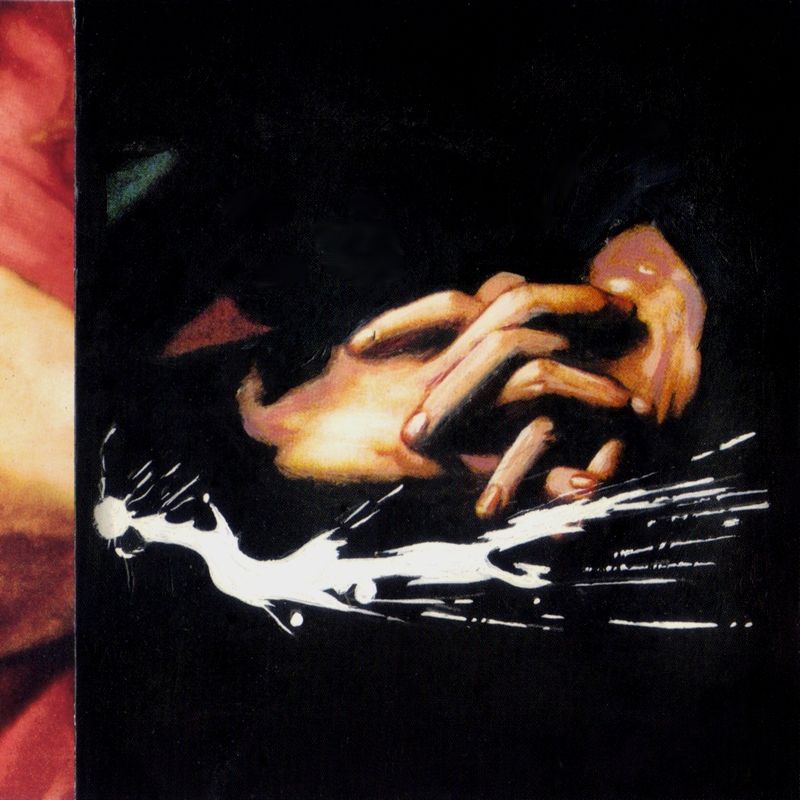
MIMEO / John Tilbury - The Hands of Caravaggio (2002)

mijn stem
4,00 (6)
6 stemmen

Oostenrijk / Verenigd Koninkrijk
Electronic / Jazz
Label: Erstwhile

  1. The Hands of Caravaggio (7:21)
  2. The Hands of Caravaggio (14:02)
  3. The Hands of Caravaggio (7:18)
  4. The Hands of Caravaggio (9:01)
  5. The Hands of Caravaggio (11:40)
totale tijdsduur: 49:22
zoeken in:
avatar
thejazzscène
Bij dit album krijg ik een beetje hetzelfde gevoel als bij Supersilent; namelijk je vindt het pas goed als je echt in de muziek komt. Anders blijft dit een hoop flarden van geluid vol onderbrekingen en dergelijke. Het is vooral sterk qua sfeerschepping. Rafael Toral zit ook bij dit ensemble zag ik net en dat verbaast me niets bij het horen van die tandartsboor-achtige geluiden.
Knap werk vind ik maar beluisteren met mate is aangeraden. Bedankt trouwens voor je stille tip trouwens, Korenbloem!
avatar van korenbloem
4,0
Inderdaad thejazzscène, het heeft voor mij bij een aantal luisterbeurten nodig gehad voor ik de plaat precies op zijn waarde kon inschatten.

Soms klinkt het hier en daar wat virtuoos, maar dat kan de pret zeker niet deren. Een sterk geïmproviseerd meesterwerk.

avatar
Sietse
hew wat leuk, andere mensen hebben deze ook opgepikt.
Heb deze al een tijdje op cd en is me een alleraardige luister ervaring.

Heb MIMEO ook wel eens live gezien en dat is ook zeker wel tof...een sessie van 4 uur (met een samenstelling waaronder oa. Fennesz, Philip Jeck en uiteraard Keith Rowe).

avatar van korenbloem
4,0
Tijdens het luisteren van deze plaat realiseerde ik me dat een mooie recensie hier eigenlijk niet zou misstaan. De 2 stemmen die dit album heeft, is echt te weinig. En ik weet dat er meer moderne electronicfans die deze plaat misschien kunnen waarderen. Nu kan ik uitgebreid verslag gaan doen. Hoe een modern piano concerto zijn ankers vind in soundscapes en electronische improvisatie en hoe overtuigend gaan beschrijven hoe prachtig dit alles bij elkaar klinkt. Want vertrouw me het klinkt prachtig. Of ik kan het aan een ander overlaten en jullie een prachtige review laten lezen wat precies de sfeer van dit prachtige album weer geeft: (ach het is woesdag avond ik ga eens voor de makkelijke weg)

On May 20, 2001 the all-star electroacoustic collective MIMEO convened with the esteemed AMM pianist John Tilbury in Bologna to record The Hands of Caravaggio , an astonishing document of the state of both improvised music and the concerto at the dawn of the twenty-first century. This landmark work is the spawn of Keith Rowe, the unofficial founder and figurehead of the formidable European improv supergroup, whose graphic score converts the darkness, drama, and flash-frozen motion of Caravaggio’s newly unearthed The Taking of Christ into a loose tactical system for coordinating “orchestra” (MIMEO) and “soloist” (Tilbury) in a modern day concerto for piano and electronics. The peculiar boldness of using of a sixteenth-century painting as a performance guide for a most decidedly twenty-first-century ensemble offers a glimpse of the subtext of conflict that drives The Hands of Caravaggio to such monumental creative heights. The record captures the inherent crisis in the dual meaning of “concerto” – drawn from either the Latin “to dispute” or the Italian “to agree” – as well as the intrinsic dialogue between noise and musicality, freedom and discipline, the shackles or virtues of history and the aggressive forward rush of technology. With results both endlessly engaging and frequently breathtaking, MIMEO and Tilbury brilliantly transform Rowe’s vision into intensely provocative music as vital and vibrant as it is conceptually enthralling.


Tilbury’s background in AMM and other like-minded improv ventures as well as his acclaimed interpretations of Feldman, Cage, and Cardew make him an ideal soloist figure in this concerto de facto which similarly straddles the line between improvisation and contemporary classical composition. By sharing this context with MIMEO’s vast electronic arsenal, however, Tilbury can be considered neither an improviser nor a concerto soloist in any conventional sense. Throughout the work, Tilbury’s performance is bound by his instrument’s historical constraints – his purely acoustic piano lacks the amplification and infinite capacity for sonic alchemy possessed by the orchestra, thus limiting his powers of equal participation. Without the dictatorial control of a conductor or the protective hand of a composer, the pianist becomes subject to the constructive and destructive whims of MIMEO’s absolute democracy and occasional lapses into anarchic squalls of frayed signals and static pulsations. To further complicate matters, Cor Fuhler trades in his electronics to play “inner piano” opposite Tilbury, whose shimmering arpeggios and clusters he captures and refracts with metallic scraping, unearthly bowings, and disarming fits of sporadic muting. As such, Tilbury has become less the master of the orchestra than its equal or, on some occasions, its victim. When permitted, he will conjure delicate wisps of chiming chords and oblique melodies; elsewhere, he sends out distress signals of razor-sharp clusters and races to fill the gaps in the orchestra’s ever-shifting textural landscape.


The orchestra around which Tilbury must maneuver is itself an imposing creature equally capable of carving out sparse, delicate atmospheres and total meltdowns of frazzled synthesizers and overloaded laptops. Yet MIMEO, composed on this occasion of Keith Rowe, Phil Durrant, Thomas Lehn, Kaffe Matthews, Jerome Noetinger, Gert-Jan Prins, Peter Rehberg, Marcus Schmickler, Rafael Toral, Markus Wettstein, and Kevin Drumm (representing the absent Christian Fennesz), has never been an organization concerned simply with its own speaker-fizzling firepower – there’s plenty of well-tuned ears as well and ample willingness to abandon the individual ego for the benefit of the music. With Rowe’s performance directions and Tilbury’s uniquely compromised musical position in mind, the eleven-man orchestra maintains a fragile balance of tenderness and ferocity throughout its steady ebb and flow of electric flicker and throb. At times the orchestra will cast sympathetic shadows of analog hum behind Tilbury’s undulations and encase his Satie-inflected chimes in gently rising swells of soft-edged pulse. Elsewhere the orchestra prods Tilbury to defensive action as it fires volleys of emergency flare screech and granular scratching into the fray. On rare and sublimely cathartic occasion, MIMEO lapses into an all-out electrical storm of such overwhelming density that Tilbury’s piano vanishes beneath its scorching sheets of hurricane-intensity static. Foreknowledge of such moments prompted Tilbury to quip as he took his place before the concert, “In one second you guys can eliminate me for once and for all.” “Less than a second,” snapped Noetinger in retort.


Yet the orchestra largely reins in its capacity for destruction and Tilbury, in spite of his apparent vulnerability, never buckles beneath its pressures – and the interactions that arise thereof are nothing short of stunning. The Hands of Caravaggio is pulled from its opening silence by the low drone of Cor Fuhler’s e-bow on open piano strings as Tilbury tosses delicately ringing sonorities into a growing pool of electronics. These arcing arpeggios and airy clusters create ripples that soon grow to waves of digital hiss and analog grit, pushing Tilbury’s plaintive piano melodies in and out of audibility while Fuhler continues to conjure ghosts from within the piano’s wood and metal mechanics. Radios sputter lost signals and alien drones rise from the ether to fill in the gaps in Tilbury’s increasingly desperate peals before the piano is tossed headlong into the maelstrom and left to rattle like a wayward echo lost somewhere in collective memory. Here the piano no longer appears as the angel of history floating above the digital morass but rather it is stripped of its historical and intrinsically Romantic underpinning and subsumed in the realm of pure texture suggested by the distinctly contemporary orchestra. The chaos, however, is temporary as MIMEO and Tilbury recover their balance – exchanging increasingly spare gestures with lightning reflexes, matching ever more haunted sonorities, receding with fragile ease into a melancholic coda, lingering until silent. It’s a seamless progression of purely organic form, astounding sonic variety, and uncommonly expressive character that is at once intriguingly original and familiar – a stunning confluence of ideas past and present.


Brilliantly conceived and sharply executed, The Hands of Caravaggio represents a landmark in the realm of free improvisation and contemporary composition. Like all great works of art, Keith Rowe’s masterpiece refuses to directly answer the questions it raises; instead, it unfurls the conflicts buried within to expose a realm of potential previously unimagined, full of surprising perspectives and revealing insight. The Hands of Caravaggio is less a nail in the coffin for the concerto than it is a call to arms, a summoning to exploit the possibilities that exist in this exciting new point in musical history. With an informed mind and a keen ear, MIMEO and John Tilbury have taken the ghosts of music’s past and the circuitry of its present to offer a glimpse of what music’s boldest future could hold. A triumph and a treasure, The Hands of Caravaggio is an instant and indispensable classic.
(bron)

Ohja en de pitch fork review

avatar

Gast
geplaatst: vandaag om 01:14 uur

avatar

geplaatst: vandaag om 01:14 uur

Let op: In verband met copyright is het op MusicMeter.nl niet toegestaan om de inhoud van externe websites over te nemen, ook niet met bronvermelding. Je mag natuurlijk wel een link naar een externe pagina plaatsen, samen met je eigen beschrijving of eventueel de eerste alinea van de tekst. Je krijgt deze waarschuwing omdat het er op lijkt dat je een lange tekst hebt geplakt in je bericht.

* denotes required fields.

Let op! Je gebruikersnaam is voor iedereen zichtbaar, en kun je later niet meer aanpassen.

* denotes required fields.