MusicMeter logo menu
MusicMeter logo
poster

Anthony Davis - Episteme (1981)

mijn stem
3,75 (14)
14 stemmen

Verenigde Staten
Jazz
Label: Gramavision

  1. Wayang No. 2 (Shadowdance) (7:37)
  2. Wayang No. 4 (Under the Double Moon): I) Dance (8:04)
  3. Wayang No. 4 (Under the Double Moon): II) Sustained Tones (4:39)
  4. Wayang No. 4 (Under the Double Moon): III) Variations (16:18)
  5. A Walk Through the Shadow (5:02)
totale tijdsduur: 41:40
zoeken in:
avatar
eazyfan
Nog geen berichten hier? Nou dan mag ik hopelijk het startschot afvuren en laat de rest maar volgen

Er zijn zo veel users op deze site waar ik toch af en toe mee praat, weliswaar is dit over de jaren heen erg verandert, in het begin praatte ik praktisch alleen met HipHopbeluisteraars, sinds ik wat meer de Jazz-kant opgegaan ben is dit natuurlijk een beetje verandert, dan kom je toch in contact met mensen op deze site waar je voordien het bestaan zelfs niet van af wist, of die je maar gewoon af en toe tegen kwam op het Forum. Mijn erg geapprecieerde Paalhaas is er zo eentje, af en toe als ik nog wat Jazz-tips nodig heb, of wat moet vragen in zake het genre kan ik bij hem terecht en daarvoor ben ik je uiterst dankbaar . Zo vroeg ik hem tijdje geleden of hij me geen Jazztip kon geven waar viool en piano tezamen kwamen, zo gevraagd zo gaf hij me dit album.

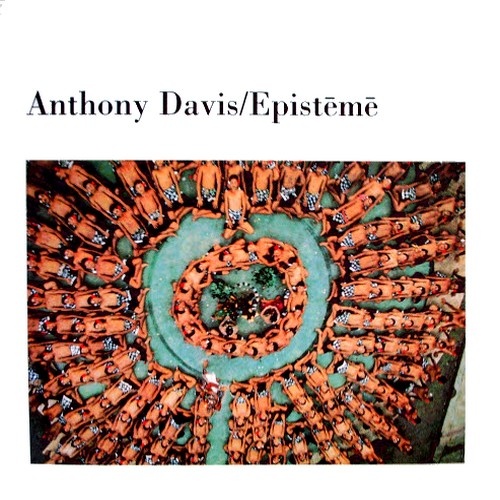
Mijn eerste indruk was: die cover Tijdje geleden toen ik in de Jazzwinkel in Brugge was zag ik deze Cd daar staan, leek me wel een tof album, maar blindelings kopen is me bij die winkel bij momenten toch ietwat te duur. Dus liet ik deze links liggen en zette ik mijn zoektocht door de immense platenkast verder, (ik ging eigenlijk voor The Shapes of Jazz to Come), zag die niet staan en dan vertrok ik weer. Dan opeens raad de enige Paalhaas mij dit aan: over toeval gesproken.

Wat me vooral opviel aan dit album is dat het best gestructureerd is (naar mijn mening althans), er is ook een constante herhaling bij stukken met variatie in de achtergrond, mijn eerste kennismaking met zo'n Jazz. Paalhaas vertelde me dat dit een moeilijk album zou zijn, nu sorry dat ik je tegen spreek maar zo "moeilijk" was me dit eigenlijk niet. De line-up ziet er qua instrumenten erg interessant uit, zo is dit album ook, begint erg mooi en wat scherp zeg maar, eindigt in een mooie en rustige mysterie.

Wayang No. 4 (Under the Double Moon): I) Dance vind ik een fantastisch nummer, het begint allemaal zo traag en wat vaag, rond de 2de minuut komt er wat versnelling en daarna wordt dat nummer werkelijk fantastisch! Veruit mijn favoriet hier.

Ik ga mometeen voor een voorzichte 4*, na meerdere luisterbeurten ben ik erg tevreden met dit album maar 4,5* vind ik toch wat te hoog.

****

avatar van Paalhaas
4,5
eazyfan schreef:
Paalhaas vertelde me dat dit een moeilijk album zou zijn, nu sorry dat ik je tegen spreek maar zo "moeilijk" was me dit eigenlijk niet.

Ik had het kunnen weten, met die 5 voor Brötzmann. Voortaan zal ik je niet meer 'sparen' als het op jazztips aankomt. Leuk dat dit album je bevalt trouwens. Eerder dan 'moeilijk' bedoelde ik misschien wel dat het eigenlijk gewoon modern klassiek is.

Ps. moge het verder duidelijk zijn dat Anthony Davis de meest onderschatte jazzmuzikant aller tijden is.

avatar van korenbloem
4,5
In de New York Times maken ze er ook een "paar" woorden aan vuil:

By ROBERT PALMER
Published: November 15, 1981

Anthony Davis had already been singled out by several critics as the most accomplished and impressive young pianist in jazz when he moved to New York City from New Haven, Conn., in 1977. As he has continued to demonstrate, most recently in a program of Thelonious Monk's compositions at Columbia University, he retains a formidable grasp of the varied resources available to jazz pianists, from the earliest styles to the most modern.

But ''Episteme,'' Mr. Davis's new album on the Grammavision Label, has at least as much to do with the complex rhythmic structures of African and Southeast Asian music and the intense, droning repetitions favored by contemporary composers such as Steve Reich as it does with jazz. Some listeners would say it isn't jazz at all, and Mr. Davis, who is now in his early 30's and divides his time between composing and playing in New York and teaching at Yale, his alma mater, would agree. To him, calling the music on ''Episteme'' jazz would be limiting and inaccurate; it's simply music.

Mr. Davis introduced the group he calls Episteme and the music it plays last year at the Kitchen, the performance loft at Broome and Wooster Streets in SoHo. The Kitchen used to be a showplace for experimental music in the tradition of John Cage and La Monte Young, but with the composer and trombonist George Lewis as its musical director, it has included jazz-based composers and various ethnic strains in its increasingly adventurous programming. Mr. Lewis, whose jazz experience includes stints as a trombonist with Count Basie and Anthony Braxton, was Anthony Davis's classmate at Yale. And like Mr. Davis, Mr. Lewis writes music that many people would hesitate to call jazz. In fact, the closest thing to ''Episteme'' on records is ''Chicago Slow Dance,'' Mr. Lewis's recent album on the Lovely Music Label.

The music on ''Episteme'' is scored for violin, cello, a flutist doubling on bass clarinet, George Lewis's trombone, Mr. Davis's piano, and three percussionists. It utilizes interlocking rhythms in several different meters and a number of mallet instruments to build up a hypnotic, shimmering sound that is very reminiscent of the gamelans or percussion orchestras that are traditional in Bali and Java. Mr. Davis has even underlined the similarities by calling his composition ''Wayangs,'' a technical term associated with gamelan music.

But the listener who stops at these similarities and concludes that Mr. Davis's entrancing music is nothing more than a gloss on gamelan music will miss the point. For one thing, much of the music's forward momentum is supplied by a jazz drummer, Pheeroan Ak Laff, who plays a standard drum kit and freely accentuates the written parts played by the other instruments. And the written music leaves room for improvisations that do more than mark time or weave variations on the written themes. Like the jazz composers he most admires -Ellington, Monk, Mingus, John Lewis - Anthony Davis writes music that forges composition and improvisation into what he calls ''a seamless and coherent musical structure.''

Seen from this viewpoint, the music on ''Episteme'' is more closely linked to the jazz tradition than one might have thought. Jazz has always drawn its inspiration from whatever was at hand. Jelly Roll Morton improvised variations on themes from marches and light opera during the earliest years of jazz, and today world music is as readily available for scrutiny as marches and operas were in Morton's turn-of-the-century New Orleans.

Growing up in Connecticut, the son of a Yale professor, Mr. Davis heard ensembles from the ethnomusicology department at nearby Wesleyan University perform South East Asian and African traditional music. It is natural that these influences should crop up in his music. But it is a mark of Mr. Davis's talent that he has transformed his original sources. His ''Wayang No. II'' and especially the new album's longest piece, ''Wayang No. IV,'' bring the improvisational talents and rhythmic acuity of some first-rate jazz players to bear on some ingenious and utterly bewitching repetition music. The album concludes with ''Walk Through The Shadow,'' an atmospheric piece for solo piano and a reminder that Mr. Davis is also impressive as a virtuoso instrumentalist.

George Lewis's ''Chicago Slow Dance'' is performed by two reed and wind players, Richard Teitelbaum on synthesizer, and Mr. Lewis on trombone and electronic instruments. There are no overt references to specific world music traditions here, and without a drummer or a bassist the music lacks the forward thrust Pheeroan Ak Laff brings to ''Episteme.'' But Mr. Lewis has written an intriguing piece. It begins with a kind of moody stasis, sustained by non-Western reed instruments and subdued electronics. The musicians play back their parts on portable tape recorders, radically altering the mood. An unaccompanied saxophone solo from Douglas Ewart leads into a storming, free-for-all conclusion. Again, ideas that are readily identifiable as jazz - the saxophone solo, the collective improvising -have been integrated into a more broadly referential composition.

But isn't that precisely what jazz composers do? Duke Ellington's early uses of extended compositional forms and his celebrated tone poems for orchestra were attacked by some jazz partisans, and when Charles Mingus began directing his reed players to squawk through their mouthpieces, some listeners thought that wasn't jazz, either. The strength of the jazz tradition is its ability absorb influences from the most far-flung sources and still retain its identifying characteristics - improvisation, rhythmic momentum. The strength of ''Episteme'' and ''Chicago Slow Dance'' is that they combine the essence of jazz with repetition, electronics, process structures, and other elements that have been alien territory for most jazzaffiliated composers. The listener does not have to limit them by calling them jazz, or anything else. They can be enjoyed as music that is both sensuous and intellectually engaging, and that's exactly what their composers seem to have intended
.

Maar eens op zoek naar die ''Chicago Slow Dance''.

Oja en: 4-> 4.5* Dit is een echt meesterwerk.

avatar van frankmulder
Die albumcover ziet er niet echt goed uit (vind het bijzonder dat hij zo geaccepteerd is). Heeft iemand toevallig een betere scan? Eentje waarbij die jongetjes (?) wat beter te onderscheiden zijn?

avatar van we tigers
ik kan een mopje repetitief marimba-rossen wel waarderen, dus deze inzending in het kader van JAVDW goed er aardig in. Mooi contrast tussen drukke ritmische elementen en trage blazers.

avatar van frankmulder
Ik vind dit toch wat teveel naar freejazz neigen; (nog) niet helemaal aan mij besteed dus.

avatar van sq
sq
2 keer gehoord. Ik ben er niet kapot van. Met name de stukken met rustige piano en verder weinig vind ik maar saai. Het lange stuk ´part iii´ is me verreweg het interessantste en ga ik nog eens proberen. De eerste nummers doen me hier en daar een beetje denken aan Philip Glass, maar dan wat minder perfect.

Al met al leuk om dit randjesgebeuren gehoord te hebben, maar niet iets om meteen te kopen als iets revolutionairs, ondanks lovende professionele kritieken.

avatar van unaej
3,0
Ik herinner me dat ik na het beluisteren van Bennie Maupin's 'The Jewel in the Lotus' absoluut niet wist wat ik ervan moest denken, en dat is hier ongeveer hetzelfde. Free-jazz die vooral neigt naar klassiek (post-)expressionisme, via abstrace melodieën
('A Walk Through the Shadow') en/of repititieve clusters die, zoals sq terecht opmerkt, aan Philip Glass doen denken.
De klanken borrelen op uit het niets, ik mis een thema als houvast of een gestructureerde solo. En toch prikkelen de wilde improvisaties, de snedige hersenspinsels van de rusteloze musici. Ik zie tekens allerhande in het schemer-donker, maar kan er nog geen concrete be-teken-is aan vastkoppelen.
Moeilijk.

avatar van unaej
3,0
Mooie conclusie ook van Robert Palmer (in het artikel dat korenbloem hier boven gepost heeft):

The strength of ''Episteme'' and ''Chicago Slow Dance'' is that they combine the essence of jazz with repetition, electronics, process structures, and other elements that have been alien territory for most jazzaffiliated composers. The listener does not have to limit them by calling them jazz, or anything else. They can be enjoyed as music that is both sensuous and intellectually engaging, and that's exactly what their composers seem to have intended.


Wat me wel nieuwsgierig maakt naar die 'Chicago Slow Dance' van George Lewis - ook maar eens proberen dus...

avatar
thejazzscène
Bij het luisteren van deze plaat leg ik steeds weer de link met een Amerikaanse noirthriller. De muziek bevat althans toch alle elementen om in die zin te denken. Het eerste nummer zou op die manier een spannende achtervolgingsscène kunnen zijn.
Veel herhaling in de muziek maar die wordt toch telkens drukker en intenser wat een meetrekkend effect met zich meebrengt. De muziek voelt psychedelisch aan in mijn oren.
Mooie sferen zijn op dit album te vinden; met de nadruk op kille, duistere en lugubere sferen. Een heel avontuurlijk album is Episteme (is dat trouwens niet de naam van het octet?) dat gauw associaties oproept.
Het werkt bij mij erg goed als achtergrondmuziekje. Zo'n controversieel werk is het dus ook niet.

avatar van Paalhaas
4,5
Hé, wat leuk om hier meer stemmen te zien. Goed bezig korenbloem.

avatar van Supernormal
3,5
korenbloem schreef:

...
droning repetitions favored by contemporary composers such as Steve Reich as it does with jazz.
...


Jongens toch, dat is straf dit hier te lezen! Ik was net "Shadowdance" aan het beluisteren en merkte vrijwel dezelfde dreunende violen als in Steve Reich's compositie "Different Trains". Da's duidelijk waar die man de mosterd van heeft gehaald!

avatar

Gast
geplaatst: vandaag om 22:04 uur

avatar

geplaatst: vandaag om 22:04 uur

Let op: In verband met copyright is het op MusicMeter.nl niet toegestaan om de inhoud van externe websites over te nemen, ook niet met bronvermelding. Je mag natuurlijk wel een link naar een externe pagina plaatsen, samen met je eigen beschrijving of eventueel de eerste alinea van de tekst. Je krijgt deze waarschuwing omdat het er op lijkt dat je een lange tekst hebt geplakt in je bericht.

* denotes required fields.

Let op! Je gebruikersnaam is voor iedereen zichtbaar, en kun je later niet meer aanpassen.

* denotes required fields.