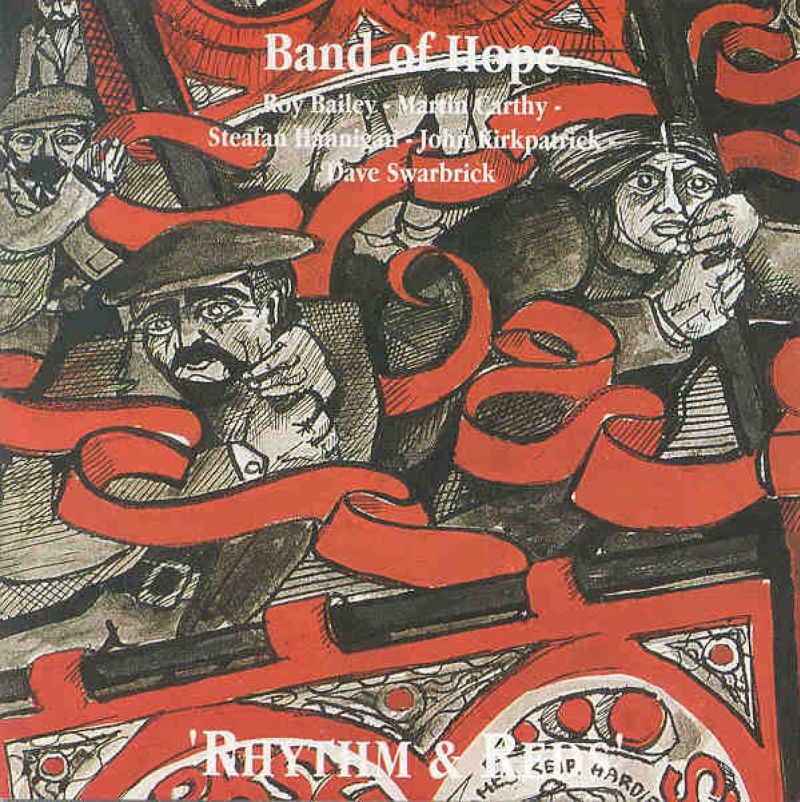
een gelegenheidsformatie deze "Band of Hope" die slechts 1 album uitbrachten. dit album werd in 2 dagen opgenomen. de groep werd samengebracht door de Engelse socialistische folk singer wijlen Roy Bailey. hij overleed op 20 november 2018 als gevolg van hartfalen in een ziekenhuis in Sheffield. een integere muzikant die het hart op de goede plaats had zitten. de man bracht vele albums uit, waaronder ook albums met "children's songs". een man die opstond voor de "working class". de liederen die op dit album worden vertolkt zijn "songs of dissent" ofwel stemmen van andersdenkenden. alle liedjes zijn protest songs en handelen over armoede, onrecht, etc. Roy Bailey was ooit lid van de folkgroep Three City Four met songwriter Leon Rosselson, die Martin Carthy van de originele line-up verving. hij was de schoonvader van het Engelse folkicoon Martin Simpson, die getrouwd is met zijn dochter Kit Bailey.
een fraai, traditioneel Engels folk album dat de moeite van het beluisteren waard is. de politiek gemotiveerde teksten staan in het begeleidende boekwerkje. tracks 1) excl. "Boxing Day" van Robb Johnson en 11) "Hard Times of Old England" zijn traditionals. de 1e 3 delen van track 1 en track 7 van Dave Swarbrick zijn instrumentale nummers. de overige nummers worden gedragen door de doorleefde, krachtige vocalen van Roy Bailey. de overige nummers zijn van 2) Jack Warshaw, 3) John Pole, 4) Robb Johnson, 5) Tom Robinson, 6) Si Kahn,

Leon Rossellson, 9) Bill Prince en 10) John Conolly.
dit album is feitelijk een soort van politiek manifest waar ik bij tijd en wijle graag naar mag luisteren.
Album werd geprodcueerd door John Eeles
Recorded at Panda Studios, North Dalton, East Yorkshire, U.K.
de muzikanten op dit album:
Roy Bailey: vocal
Martin Carthy: guitar, vocal, backing vocal
Steafan Hannigan: percussion, uileann pipes, whistle, bodhran, cittern, backing vocal
John Kirkpatrick: button accordion, melodion, vocal, backing vocal
Dave Swarbrick: fiddle, mandolin, backing vocal
uit de liner notes van Roy Bailey (Sheffield, February 1994)
quote
"Folk songs have always been songs made by and for ordinary people. Songs that tell stories and spread news. Long before the printed word and a general literacy to benefit from it, there were singers with their songs. Some travelled the country and entertained and informed communities of events elsewhere. Many of the songs were of romance and intrigue, of battles and feuds, of marriages and politics. There were dances, songs ,stories and music, their roots often to be found within traditional customs and beliefs and pre-christian religions. In amongst such music resided songs of dissent, songs that expressed anger and hope for a better life, songs that called upon communities to resist the powerful and overthrow the tyrants. Perhaps the most often quoted song in this respect is "The Cutty Wren" said to date from the Peasants' Revolt of 1381. In fourthcenth century England the peasants sang of killing the wren (i.e. the Feudal Lord) and distributing his wealth amongst the poor. In the twentieth century folk singers sing of unemployment or a desire for peace, for security and freedom from fear"
unquote