Ooit (5-12-2009 om precies te zijn) schreef ik voor de niet meer bestaande review site EARlabs het volgende:
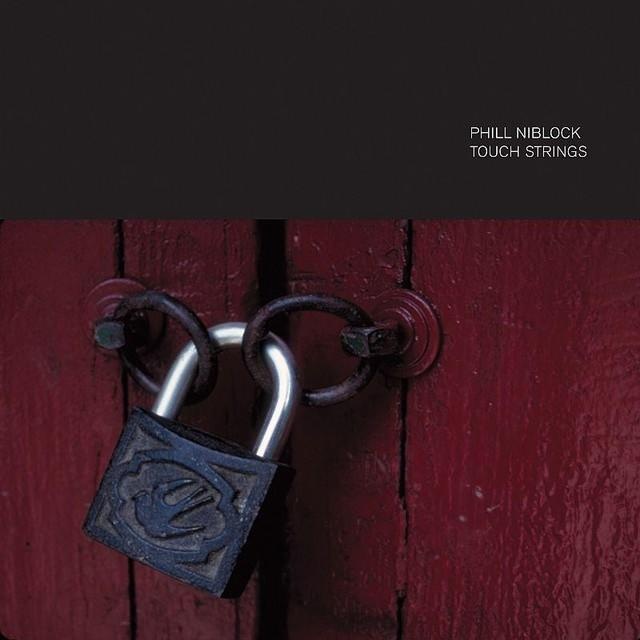
Not unexpected the album by the American composer contains music specially written for stringed instruments. Three different pieces, presented in distinct parts, fill this double cd with over 2 hours of music. Stosspeng, which consists of 6 parts, fills the first disc and is a piece for guitars and bass guitars played by the musicians Susan Stenger and Robert Poss. Disc two contains the pieces Poure, written for Arne Deforce on cello, and One Large Rose, consisting of 5 parts written for The Nelly Boyd Ensemble with the musicians Robert Engelbrecht on cello, Jan Feddersen on piano, Peter Imig on violin and Jens Roehm on acoustic bass guitar.
Stosspeng
The piece Stosspeng is approximately one hour long, cut up in 6 parts of 10 minutes.
With this being for guitar and bass guitar Niblock choose the work with an interval of tones lying really close to each other. Only the 3 half tones E, F and F# are used. With these notes all music in this piece is created.
As you could expect Niblock wouldn't just let them play normal notes, but instead these are stretched fully sustained notes.
With the different instruments several recordings were made in different octaves. With these initial recordings Niblock went in to the studio and created the hour long piece in pro tools.
In the hour long you do not hear just one long stretched sound, but rather you hear the different layers play with each other. Phasing patterns appear in the piece creating overtones and micro sounds you wouldn't expect. While with superficial listening you wouldn't notice but throughout this whole piece there seems to be no repetition in the created harmonies.
Stosspeng is a strong piece showing very well how with minimal means a massive musical piece can be created.
Poure
Poure is created in a completely different way. For this piece Niblock wrote for cello, also playing long sustained notes, but now following a sine wave on an oscilloscope. As ground tones A and D were used, but while these are very clear notes the oscilloscope was set just a little aside from this, making the cellist Arne Deforce playing a-tonal sounds. In this way a total of 32 tracks were recorded and layered in Protools.
The result is a massive piece of dissonant tones flowing in and out each other creating small overtones and microtonality. The result is one massive drone piece from acoustic sounds. While the sounds on its own might not be really impressive, this as a whole piece of dissonance is dragging you in like a whirlwind.
Another great piece, which due to the used tones is hard to get into. But the diehards know how to appreciate this.
One Large Rose
Again a composition taking things from another perspective. For One Large Rose Niblock took a composition called Three Orchids, which is originally for three orchestras, as a starting point. While the original composition was only 23 minutes he doubled it by giving all notes twice the length. Because of this not only the notes do change, but also the interval between the different tonalities change. The different notes come closer in the pitch.
The piece was divided into four parts, each for each musician. Though instead of doing just one recording the piece has been recorded four times. Each time a musician played another part. From these session 20 tracks were recorded (the piano always got two tracks). All 20 tracks are layered over each other starting from the exact same point. The only “technique” used on the recordings is giving using different tracks for the stereo channels.
The result we get from this is a strange unearthly piece. At some points the sounds work very harmonic, while at others a blurry dissonant cloud is heard. Specially the softer parts come out more clean and sound very lovely, while when things get louder the things become hard to get a grip on.
Not that it sounds awful, 'cause that is not the case, but strange it is.
As a whole Touch Strings is a good album. An album of pure drone music in the classical form. It fits in very well with the other music done by Phill Niblock and as such isn't really surprising. But while not being anything new sounding the techniques are interesting and the result is one to be happy with. And this last one is what counts the most in my book.
A good album, nothing more and nothing less. Go grab it.
En daar sta ik nog steeds achter.