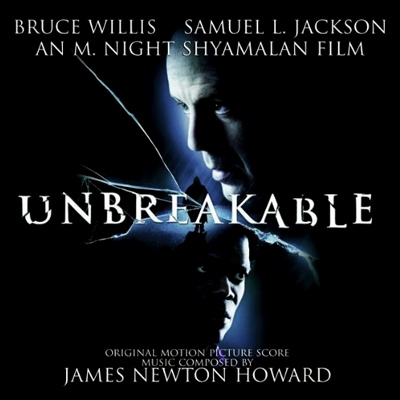
Even wat extra info

Verwijderde scenes en score en wat over de dvd extra's (tijdje terug in het Engels geschreven:
Composers often deal with a project were they have been working on for so long, and find themselves in the position were a director rejects their whole work. That's not something anybody would like to see. When writing a score there are other risks; like the fact that when you've recorded the score on stage and its mixed with dialogue and sound effects and the score is the victim of it. So it is very low in volume and can't be heard most of the times. James Newton Howard already began on Unbreakable when he just had read the script, so he was brought in very early on and already familiar with M. Night Shyalaman. Now because of various reasons, certain scenes were cut out of the film. Some of them featured no music, some of them did. Here's a anatomy of three sequences that didn't made it into the film, but featured some perfect score by JNH:
Scene 1 foto
This scene was taking place right after the train crash, when David Dunn returns home. He has a small chat with his son Joseph. You then hear the shower running, while you see a report on the news of the train crash. The lightness of the piano theme takes you inside the shower, while cello's and the heroic, yet mournful trumpet solo allude to Dunn. In the very opening of the film this piano/string/cello based theme was introduced, but this heroic sense was maybe a bit to early, the same for the scene. The emotional breakdown is too big, too much. Also note that the music was also a bit to fast with trying to come up with the heroic feel for this character, since he must first begin te understand his powers, before really showing as a superhero. He actually looks kind of fragile, in a other way off course.
Scene 2 foto
There are a few moments in the film where you see the the Elijah character the fragile way he is. One is in the beginning as he's born, another one is when Elijah is the age in the time of main plot, falling down some stairs, and one is his mother pursuades him to go outside, where a comic book is waiting for him on a bench. It was cutted from the film, because the message was clear and slowed the pace down. In this particular scene we see another flashback from his youth, when he dares to go into a wildride on this fun fair. For a while he seems to be ok, but than the ride goes faster. Thats when JNH's music gets involved, consisting of primarily the heavy, intruiging cello and strings. When the ride has stopped and his mother goes looking for him, the piano theme can be heard, while the cellos continue. The cracking and banging of his body against the backside of the ride he's hurt even more when these cello sounds accompony this moment of tragedy.
Scene 3 foto
This sequence was deleted for the simple reason that it was already clear that Dunn could lift a lot of weight when weightlifting, so a reprise was not fitting and would slow the pace down. The cue called , how appropiate, ''Weightlifting'' was written by the composer for his discovery. A calm melody evolves to calmorous strings and solo horns, depicting the hero trying his power. It moves sort of into a magical, tingling piece, with even some harps, making up for the rest of the magic. The build up of the instrumentation goes higher, as Dunn lifts more weight. Now with the reprise, it wasn't suppose to be so uplifting as the previous one, it needed to score a part where the character wanted to try it one more time, just to be sure of the matter. So JNH scored it slighty different in use of the instruments, not even talking about the tone hights performes, which are off course put in a more restrained position.
---------------------------------------------------------------
James Newton Howard doet zo ook zijn zegje op de dvd (zie hier een
foto ), waarin hij een duidelijke statement maakt waarin hij zegt dat de vereiste muziek herkenbaar moest zijn voor de film. M. Night wilde dat mensen zo zouden kunnen aanwijzen dat dat de muziek van Unbreakable of The Village is. Allen hebben een eigen geluid, een eigen karakter, zo herkenbaar. The Sixth Sense had dit stukken minder.
Over de mixage van de score:
De mixage heeft misschien wel wat weg van de dalogen in de film, die vaak zo fluisterend zijn dat je het niet goed kan verstaan. Het mixen van de score is echter voor mijn gevoel niet in balans. Vele zijn zo zacht opgenomen dat de harde stukken overdonderen (indien het volume allang hoger is gezet).
Hoe de componist begon met de score:
De componist componeerde als eerste een stuk score voor de scene waarin Kevin Dunne in het metrostation in contact de daden van mensen doorziet, waarbij een lichte beat gehanteerd wordt . De regisseur was er gek op en wilde dat Howard het vaker gebruikte, zo ook meteen bij de aantiteling van de film, terug te horen in ''Visions''.