

Genres / Jazz / Jazz-album van de week
zoeken in:

0
geplaatst: 5 december 2008, 14:01 uur
frankmulder schreef:
Op basis van ronde 3 concludeer ik dat dit de actievelingen zijn:
Heemskerktollie, Jesse, korenbloem, frankmulder, voltazy, klaezman, thejazzscene, sq, Vince Vega, we tigers, blabla, unaej, The Scientist
Op basis van ronde 3 concludeer ik dat dit de actievelingen zijn:
Heemskerktollie, Jesse, korenbloem, frankmulder, voltazy, klaezman, thejazzscene, sq, Vince Vega, we tigers, blabla, unaej, The Scientist
In dit rijtje ontbreekt wcs nog.
Het klopt overigens toch dat we inmiddels een nieuwe ronde begonnen zijn? Ik neem aan dat wcs het laatste album van de vorige ronde heeft gepresenteerd, en ik de eerste van de nieuwe ronde?

0
geplaatst: 5 december 2008, 15:15 uur
Volgens mij heb ik het eerste album van deze ronde gepresenteerd en dan is dit de eerste ronde dat Wcs ook een album heeft gekozen.
Edit: Dit was dus de vorige ronde.
Edit: Dit was dus de vorige ronde.
0
geplaatst: 5 december 2008, 16:17 uur
Sorry, niet goed gekeken. Maar dan is dat nu duidelijk.
korenbloem zoekt de volgende uit.
korenbloem zoekt de volgende uit.

0
geplaatst: 5 december 2008, 17:15 uur
Ik zie nu pas dat 'Livingroom Hush' al 30 stemmen heeft. Prachtige plaat, daar niet van, maar zeggen de oorspronkelijke regels niet dat een album maximum 20 stemmen mag hebben om in aanmerking te komen?
(muggenzifterij natuurlijk, waarvoor mijn excuses... )
)
(muggenzifterij natuurlijk, waarvoor mijn excuses...
)
0
geplaatst: 5 december 2008, 17:37 uur
Scherp Unaej, was mij niet
Alleen denk ik dat Frank snel een keuze moest maken, en dit ook heeft gedaan.
Frank heeft mij gevraagd om het volgende album te doen en deze zal weer onder de 20 stemmen zijn, en die daarop volgen ook denk ik.
Alleen denk ik dat Frank snel een keuze moest maken, en dit ook heeft gedaan.
Frank heeft mij gevraagd om het volgende album te doen en deze zal weer onder de 20 stemmen zijn, en die daarop volgen ook denk ik.
0
geplaatst: 5 december 2008, 19:01 uur
unaej schreef:
Ik zie nu pas dat 'Livingroom Hush' al 30 stemmen heeft. Prachtige plaat, daar niet van, maar zeggen de oorspronkelijke regels niet dat een album maximum 20 stemmen mag hebben om in aanmerking te komen?
Ik zie nu pas dat 'Livingroom Hush' al 30 stemmen heeft. Prachtige plaat, daar niet van, maar zeggen de oorspronkelijke regels niet dat een album maximum 20 stemmen mag hebben om in aanmerking te komen?
Hm, toen die regels werden opgesteld was ik er nog niet bij.
Ik zal er volgende keer rekening mee houden. Overigens heb ik wel gekeken of de vaste bezoekers van het JAvdW hem niet al kenden, en nog maar 1 persoon kende hem, dus leek hij me wel geschikt. En zo te zien hebben al 3 mensen expliciet gezegd dat ze het een leuke keuze vonden, dus volgens mij is iedereen nu blij, ondanks deze overtreding van de regels (ben ik even blij dat ik die regel niet kende). 
0
geplaatst: 7 december 2008, 17:12 uur
Zeg improvisatie-intimi! gaat er deze week nog een album komen?
Korenbloem?
Korenbloem?
0
geplaatst: 7 december 2008, 17:17 uur
improvisatie-intimi
???
ps jaja, maar ben nog ff met wat anders bezig.
0
geplaatst: 7 december 2008, 17:20 uur
ik dacht laat ik eens lekker allitererend alternatief voor jazzliefhebbers proberen...
ik ben geduldig
ik ben geduldig
0
geplaatst: 7 december 2008, 19:18 uur
Om eerlijk te zijn. Het wordt hoe meer jazz albums ik ken, hoe moeilijker het wordt om er een aan te wijzen. Ik heb steeds een aantal platen waarvan ik vind dat zij hieronder de aandacht gebracht mogen en moeten worden. Ik wordt dan ook met de dag enthousiaster als ik naar sommige platen luister
Ik noem een aantal titels:
Albert Ayler - New York Eye... Dit is eigenlijk precies tussen Ornette Coleman - Free Jazz (A Collective Improvisation) (1961) en John Coltrane - Ascension (1966) in. Onbegrijpelijk dat dit album niet meer bekendheid heeft, (ps jesse bevalt hij?).
Julius Hemphill - Dogon A.D. (1972) Tja dit is een van mijn favourite jazz albums. Gewoon zuivere jazzn niet meer niet minder. Lees maar eens wat de nederlandse blogger erover schrijft: http://freejazz-stef.blogsp... (zit tevens een kleine verassing bij) als je naar de nederlandse gedeelte gaat kun je de zelfde recensie in het nederlands lezen.
Maar ook een van de onbekenste platen van het blue Note label (met de oude crew) wil ik even onder de aandacht brengen. De eigenaar (Francis Wolff) betaalde dit album uit eigen zak, Dit is een van de meest soul volle jazz platen. Een koor wat begeleid wordt door experimental bigband, wat afrikaanse invloeden probeerd te verwerken in jazz. dit is de plaat hoe Max Roach - We Insist!.... had kunnen (of moeten ) klinken:
Eddie Gale - Ghetto Music (...
Maar geen van deze platen wil ik kiezen, ik wil ze alleen benoemen. Toch denk ik dat deze 3, bij velen van jullie beter in de smaak was gevallen. Het album wat ik heb gekozen, is een mix van pure avangarde, freejazz en klassieke muziek. Emotie, ontmoet ratio. "Verstandskonijnen" (zoals blabla eens mooi schreef bij een album) die hun ziel bloot geven en alle techniek met gevoel en emotie kunnen verwoorden in slecht 50 minuten.
Anthony Davis - Episteme (1989)
Maar hier is meer aan de hand....
Lees hieronder een revieuw die ik las op het net wat in de N.Y. Times stond... dit verwoord precies mijn gevoel rond dit album.
by ROBERT PALMER
Published: November 15, 1981
Hierbij wil ik iedereen een tip meegeven... Dit wordt en is het meest afwijkende Jazz album van de week, m.i. tot nu toe. een album wat echt de tijd nodig zal hebben, neem er dan ook de tijd voor. Dit vraagt meer van je dan de andere free - avantgarde jazz albums. (waarom zeg ik dit: ik denk altijd, als ik het mooi kan vinden, kan iedereen het, heb alleen iets geduld,)
Op de site Classical Convert worden aantal tips gegeven over hoe je te luisteren naar.... Deze wil ik jullie toch meegeven.
Once you decide on your piece, you need to get hold of it.
Listen (a lot) and learn (a little) - Now that you have your recording, listen to it endlessly - at work, on your iPod while walking, in the shower, everywhere. Listen to it six or seven times before even considering giving up. Listen to it all the way through, no cheating - it’s a journey and the movements need to be heard in that order. Read the liner notes if you have them, if you don’t (for example, if you’re listening on iTunes) google for the name of the piece along with “program notes” which should give you examples of the pamphlets they hand out at concerts for the piece. These might go into way too much detail for you with crap like: “…he modulates to the subdominant in the exposition…” but don’t stress over these parts. Just get a feel for what kind of emotions the composer is conveying, and maybe what was going on in his life when he wrote it.
Gather your thoughts - Now that you’ve listened to the whole piece through seven times you’ve probably begun to understand the prominent melodies, hopefully this kind of came as a surprise. You might have noticed that instead of meandering around and doing lots of pretty-pretty stuff which is kind of what most people expect, the music actually deliberately goes somewhere, and tends to return back to where it started. You also might notice that these long, complicated sounding movements actually just contain two big, important melodies.
Listen more selectively - Probably the tunes are finally sticking in your head in the same way that popular pieces do. Weren’t expecting that, were ya? You might well think that one movement is good, but you don’t really get the others so much. That’s fine, listen to that one movement on it’s own a few times. Then try listening to the whole thing through again. You’ll probably start to like the bits you didn’t like before more, once your head and heart warm up to the style.
Als je doet wat hier staat, zal dit zeker niet tegen vallen.
pm voor links
Ik noem een aantal titels:
Albert Ayler - New York Eye... Dit is eigenlijk precies tussen Ornette Coleman - Free Jazz (A Collective Improvisation) (1961) en John Coltrane - Ascension (1966) in. Onbegrijpelijk dat dit album niet meer bekendheid heeft, (ps jesse bevalt hij?).
Julius Hemphill - Dogon A.D. (1972) Tja dit is een van mijn favourite jazz albums. Gewoon zuivere jazzn niet meer niet minder. Lees maar eens wat de nederlandse blogger erover schrijft: http://freejazz-stef.blogsp... (zit tevens een kleine verassing bij
) als je naar de nederlandse gedeelte gaat kun je de zelfde recensie in het nederlands lezen.Maar ook een van de onbekenste platen van het blue Note label (met de oude crew) wil ik even onder de aandacht brengen. De eigenaar (Francis Wolff) betaalde dit album uit eigen zak, Dit is een van de meest soul volle jazz platen. Een koor wat begeleid wordt door experimental bigband, wat afrikaanse invloeden probeerd te verwerken in jazz. dit is de plaat hoe Max Roach - We Insist!.... had kunnen (of moeten
) klinken:Eddie Gale - Ghetto Music (...
Maar geen van deze platen wil ik kiezen, ik wil ze alleen benoemen. Toch denk ik dat deze 3, bij velen van jullie beter in de smaak was gevallen. Het album wat ik heb gekozen, is een mix van pure avangarde, freejazz en klassieke muziek. Emotie, ontmoet ratio. "Verstandskonijnen" (zoals blabla eens mooi schreef bij een album) die hun ziel bloot geven en alle techniek met gevoel en emotie kunnen verwoorden in slecht 50 minuten.
Anthony Davis - Episteme (1989)
Maar hier is meer aan de hand....
Lees hieronder een revieuw die ik las op het net wat in de N.Y. Times stond... dit verwoord precies mijn gevoel rond dit album.
by ROBERT PALMER
Published: November 15, 1981
Anthony Davis had already been singled out by several critics as the most accomplished and impressive young pianist in jazz when he moved to New York City from New Haven, Conn., in 1977. As he has continued to demonstrate, most recently in a program of Thelonious Monk's compositions at Columbia University, he retains a formidable grasp of the varied resources available to jazz pianists, from the earliest styles to the most modern.
But ''Episteme,'' Mr. Davis's new album on the Grammavision Label, has at least as much to do with the complex rhythmic structures of African and Southeast Asian music and the intense, droning repetitions favored by contemporary composers such as Steve Reich as it does with jazz. Some listeners would say it isn't jazz at all, and Mr. Davis, who is now in his early 30's and divides his time between composing and playing in New York and teaching at Yale, his alma mater, would agree. To him, calling the music on ''Episteme'' jazz would be limiting and inaccurate; it's simply music.
Mr. Davis introduced the group he calls Episteme and the music it plays last year at the Kitchen, the performance loft at Broome and Wooster Streets in SoHo. The Kitchen used to be a showplace for experimental music in the tradition of John Cage and La Monte Young, but with the composer and trombonist George Lewis as its musical director, it has included jazz-based composers and various ethnic strains in its increasingly adventurous programming. Mr. Lewis, whose jazz experience includes stints as a trombonist with Count Basie and Anthony Braxton, was Anthony Davis's classmate at Yale. And like Mr. Davis, Mr. Lewis writes music that many people would hesitate to call jazz. In fact, the closest thing to ''Episteme'' on records is ''Chicago Slow Dance,'' Mr. Lewis's recent album on the Lovely Music Label.
The music on ''Episteme'' is scored for violin, cello, a flutist doubling on bass clarinet, George Lewis's trombone, Mr. Davis's piano, and three percussionists. It utilizes interlocking rhythms in several different meters and a number of mallet instruments to build up a hypnotic, shimmering sound that is very reminiscent of the gamelans or percussion orchestras that are traditional in Bali and Java. Mr. Davis has even underlined the similarities by calling his composition ''Wayangs,'' a technical term associated with gamelan music.
But the listener who stops at these similarities and concludes that Mr. Davis's entrancing music is nothing more than a gloss on gamelan music will miss the point. For one thing, much of the music's forward momentum is supplied by a jazz drummer, Pheeroan Ak Laff, who plays a standard drum kit and freely accentuates the written parts played by the other instruments. And the written music leaves room for improvisations that do more than mark time or weave variations on the written themes. Like the jazz composers he most admires -Ellington, Monk, Mingus, John Lewis - Anthony Davis writes music that forges composition and improvisation into what he calls ''a seamless and coherent musical structure.''
Seen from this viewpoint, the music on ''Episteme'' is more closely linked to the jazz tradition than one might have thought. Jazz has always drawn its inspiration from whatever was at hand. Jelly Roll Morton improvised variations on themes from marches and light opera during the earliest years of jazz, and today world music is as readily available for scrutiny as marches and operas were in Morton's turn-of-the-century New Orleans.
Growing up in Connecticut, the son of a Yale professor, Mr. Davis heard ensembles from the ethnomusicology department at nearby Wesleyan University perform South East Asian and African traditional music. It is natural that these influences should crop up in his music. But it is a mark of Mr. Davis's talent that he has transformed his original sources. His ''Wayang No. II'' and especially the new album's longest piece, ''Wayang No. IV,'' bring the improvisational talents and rhythmic acuity of some first-rate jazz players to bear on some ingenious and utterly bewitching repetition music. The album concludes with ''Walk Through The Shadow,'' an atmospheric piece for solo piano and a reminder that Mr. Davis is also impressive as a virtuoso instrumentalist.
George Lewis's ''Chicago Slow Dance'' is performed by two reed and wind players, Richard Teitelbaum on synthesizer, and Mr. Lewis on trombone and electronic instruments. There are no overt references to specific world music traditions here, and without a drummer or a bassist the music lacks the forward thrust Pheeroan Ak Laff brings to ''Episteme.'' But Mr. Lewis has written an intriguing piece. It begins with a kind of moody stasis, sustained by non-Western reed instruments and subdued electronics. The musicians play back their parts on portable tape recorders, radically altering the mood. An unaccompanied saxophone solo from Douglas Ewart leads into a storming, free-for-all conclusion. Again, ideas that are readily identifiable as jazz - the saxophone solo, the collective improvising -have been integrated into a more broadly referential composition.
But isn't that precisely what jazz composers do? Duke Ellington's early uses of extended compositional forms and his celebrated tone poems for orchestra were attacked by some jazz partisans, and when Charles Mingus began directing his reed players to squawk through their mouthpieces, some listeners thought that wasn't jazz, either. The strength of the jazz tradition is its ability absorb influences from the most far-flung sources and still retain its identifying characteristics - improvisation, rhythmic momentum. The strength of ''Episteme'' and ''Chicago Slow Dance'' is that they combine the essence of jazz with repetition, electronics, process structures, and other elements that have been alien territory for most jazzaffiliated composers. The listener does not have to limit them by calling them jazz, or anything else. They can be enjoyed as music that is both sensuous and intellectually engaging, and that's exactly what their composers seem to have intended.
But ''Episteme,'' Mr. Davis's new album on the Grammavision Label, has at least as much to do with the complex rhythmic structures of African and Southeast Asian music and the intense, droning repetitions favored by contemporary composers such as Steve Reich as it does with jazz. Some listeners would say it isn't jazz at all, and Mr. Davis, who is now in his early 30's and divides his time between composing and playing in New York and teaching at Yale, his alma mater, would agree. To him, calling the music on ''Episteme'' jazz would be limiting and inaccurate; it's simply music.
Mr. Davis introduced the group he calls Episteme and the music it plays last year at the Kitchen, the performance loft at Broome and Wooster Streets in SoHo. The Kitchen used to be a showplace for experimental music in the tradition of John Cage and La Monte Young, but with the composer and trombonist George Lewis as its musical director, it has included jazz-based composers and various ethnic strains in its increasingly adventurous programming. Mr. Lewis, whose jazz experience includes stints as a trombonist with Count Basie and Anthony Braxton, was Anthony Davis's classmate at Yale. And like Mr. Davis, Mr. Lewis writes music that many people would hesitate to call jazz. In fact, the closest thing to ''Episteme'' on records is ''Chicago Slow Dance,'' Mr. Lewis's recent album on the Lovely Music Label.
The music on ''Episteme'' is scored for violin, cello, a flutist doubling on bass clarinet, George Lewis's trombone, Mr. Davis's piano, and three percussionists. It utilizes interlocking rhythms in several different meters and a number of mallet instruments to build up a hypnotic, shimmering sound that is very reminiscent of the gamelans or percussion orchestras that are traditional in Bali and Java. Mr. Davis has even underlined the similarities by calling his composition ''Wayangs,'' a technical term associated with gamelan music.
But the listener who stops at these similarities and concludes that Mr. Davis's entrancing music is nothing more than a gloss on gamelan music will miss the point. For one thing, much of the music's forward momentum is supplied by a jazz drummer, Pheeroan Ak Laff, who plays a standard drum kit and freely accentuates the written parts played by the other instruments. And the written music leaves room for improvisations that do more than mark time or weave variations on the written themes. Like the jazz composers he most admires -Ellington, Monk, Mingus, John Lewis - Anthony Davis writes music that forges composition and improvisation into what he calls ''a seamless and coherent musical structure.''
Seen from this viewpoint, the music on ''Episteme'' is more closely linked to the jazz tradition than one might have thought. Jazz has always drawn its inspiration from whatever was at hand. Jelly Roll Morton improvised variations on themes from marches and light opera during the earliest years of jazz, and today world music is as readily available for scrutiny as marches and operas were in Morton's turn-of-the-century New Orleans.
Growing up in Connecticut, the son of a Yale professor, Mr. Davis heard ensembles from the ethnomusicology department at nearby Wesleyan University perform South East Asian and African traditional music. It is natural that these influences should crop up in his music. But it is a mark of Mr. Davis's talent that he has transformed his original sources. His ''Wayang No. II'' and especially the new album's longest piece, ''Wayang No. IV,'' bring the improvisational talents and rhythmic acuity of some first-rate jazz players to bear on some ingenious and utterly bewitching repetition music. The album concludes with ''Walk Through The Shadow,'' an atmospheric piece for solo piano and a reminder that Mr. Davis is also impressive as a virtuoso instrumentalist.
George Lewis's ''Chicago Slow Dance'' is performed by two reed and wind players, Richard Teitelbaum on synthesizer, and Mr. Lewis on trombone and electronic instruments. There are no overt references to specific world music traditions here, and without a drummer or a bassist the music lacks the forward thrust Pheeroan Ak Laff brings to ''Episteme.'' But Mr. Lewis has written an intriguing piece. It begins with a kind of moody stasis, sustained by non-Western reed instruments and subdued electronics. The musicians play back their parts on portable tape recorders, radically altering the mood. An unaccompanied saxophone solo from Douglas Ewart leads into a storming, free-for-all conclusion. Again, ideas that are readily identifiable as jazz - the saxophone solo, the collective improvising -have been integrated into a more broadly referential composition.
But isn't that precisely what jazz composers do? Duke Ellington's early uses of extended compositional forms and his celebrated tone poems for orchestra were attacked by some jazz partisans, and when Charles Mingus began directing his reed players to squawk through their mouthpieces, some listeners thought that wasn't jazz, either. The strength of the jazz tradition is its ability absorb influences from the most far-flung sources and still retain its identifying characteristics - improvisation, rhythmic momentum. The strength of ''Episteme'' and ''Chicago Slow Dance'' is that they combine the essence of jazz with repetition, electronics, process structures, and other elements that have been alien territory for most jazzaffiliated composers. The listener does not have to limit them by calling them jazz, or anything else. They can be enjoyed as music that is both sensuous and intellectually engaging, and that's exactly what their composers seem to have intended.
Hierbij wil ik iedereen een tip meegeven... Dit wordt en is het meest afwijkende Jazz album van de week, m.i. tot nu toe. een album wat echt de tijd nodig zal hebben, neem er dan ook de tijd voor. Dit vraagt meer van je dan de andere free - avantgarde jazz albums. (waarom zeg ik dit: ik denk altijd, als ik het mooi kan vinden, kan iedereen het, heb alleen iets geduld,)
Op de site Classical Convert worden aantal tips gegeven over hoe je te luisteren naar.... Deze wil ik jullie toch meegeven.
Once you decide on your piece, you need to get hold of it.
Listen (a lot) and learn (a little) - Now that you have your recording, listen to it endlessly - at work, on your iPod while walking, in the shower, everywhere. Listen to it six or seven times before even considering giving up. Listen to it all the way through, no cheating - it’s a journey and the movements need to be heard in that order. Read the liner notes if you have them, if you don’t (for example, if you’re listening on iTunes) google for the name of the piece along with “program notes” which should give you examples of the pamphlets they hand out at concerts for the piece. These might go into way too much detail for you with crap like: “…he modulates to the subdominant in the exposition…” but don’t stress over these parts. Just get a feel for what kind of emotions the composer is conveying, and maybe what was going on in his life when he wrote it.
Gather your thoughts - Now that you’ve listened to the whole piece through seven times you’ve probably begun to understand the prominent melodies, hopefully this kind of came as a surprise. You might have noticed that instead of meandering around and doing lots of pretty-pretty stuff which is kind of what most people expect, the music actually deliberately goes somewhere, and tends to return back to where it started. You also might notice that these long, complicated sounding movements actually just contain two big, important melodies.
Listen more selectively - Probably the tunes are finally sticking in your head in the same way that popular pieces do. Weren’t expecting that, were ya? You might well think that one movement is good, but you don’t really get the others so much. That’s fine, listen to that one movement on it’s own a few times. Then try listening to the whole thing through again. You’ll probably start to like the bits you didn’t like before more, once your head and heart warm up to the style.
Als je doet wat hier staat, zal dit zeker niet tegen vallen.
pm voor links
0
geplaatst: 7 december 2008, 19:31 uur
Hey, die ken ik al.  Dat is voor het eerst in dit topic, en wel dankzij de voormalige eazyfan.
  Die had mij dat album namelijk al eens aangeraden. De eerste keer dat ik hem luisterde kon ik er niet veel mee, en de tweede keer was hij al beter. Dat hij nu het JAvdW is, is een mooie gelegenheid om hem minimaal een derde keer te beluisteren.
Dat is voor het eerst in dit topic, en wel dankzij de voormalige eazyfan. Die had mij dat album namelijk al eens aangeraden. De eerste keer dat ik hem luisterde kon ik er niet veel mee, en de tweede keer was hij al beter. Dat hij nu het JAvdW is, is een mooie gelegenheid om hem minimaal een derde keer te beluisteren.
0
geplaatst: 7 december 2008, 19:35 uur
ik zou hem toch echt vaker als 3 keer luisteren nu  . Het zal echt de moeite waard zijn, voel mij net een fanatiekeling die iemand anders van zijn geloof wil overtuigen
  , maar ik vind deze plaat gewoon erg mooi
. Het zal echt de moeite waard zijn, voel mij net een fanatiekeling die iemand anders van zijn geloof wil overtuigen , maar ik vind deze plaat gewoon erg mooi
0
geplaatst: 7 december 2008, 19:38 uur
Daarom zei ik ook 'minimaal een derde keer'. Maar ik ken het gevoel; je gunt andere mensen natuurlijk hetzelfde plezier als dat jij aan de muziek beleeft.
Maar ik ken het gevoel; je gunt andere mensen natuurlijk hetzelfde plezier als dat jij aan de muziek beleeft.
0
thejazzscène
geplaatst: 7 december 2008, 21:39 uur
Ja, dat is een vrij bekende plaat al ben ik niet zo'n fan van het Albert Aylers' muziek.
0
Heemskerktollie
geplaatst: 14 december 2008, 19:44 uur
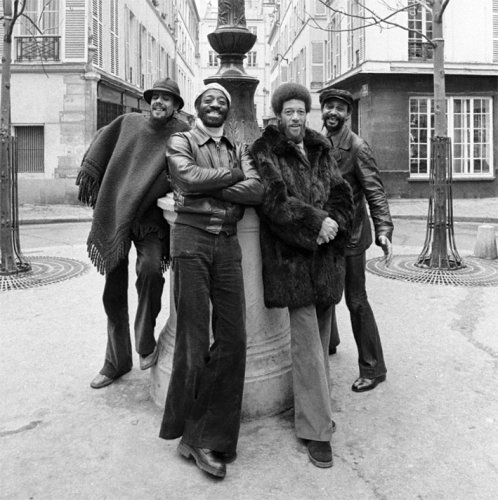
Frank Wright (tenor saxophone); Bobby Few (piano); Alan Silva (bass instrument); Muhammad Ali (drums).
En deze keer stond ik dan voor deze zware opgave: een mooi jazz-album v/d week uitkiezen. Veel jazzliefhebbers lijken hier een bepaalde voorkeur te hebben. De één houdt van wat traditioneler werk, de ander van Fusion, weer een ander van Harbop en dan ook nog de grote groep die freejazz als de ware muzievorm beschouwen. Dat maakt het lastig voor mij. Bijna alle jazz spreekt mij aan. Het is voor mij de ultieme muziekvorm. Als keuze had ik dus New Orleans/Traditional, Swing, Bebop, Hardbop, Freejazz, Mainstream enz. Lastig...
Wederom kon ik het niet laten... Ik kies voor een pittig freejazz album. Een hele pittige. Ik kocht deze plaat afgelopen zomer nadat ik Wright had horen spelen bij Albert Ayler. Hij speelde ook regelmatig met de zwaar onderschatte altsaxofonist Noah Howard en ook met Cecil Taylor. Zijn geluid vertegenwoordigt gewoon bijna alles wat er in de jaren '60 gebeurde met jazzmuziek. Er is wel een invloed te horen van Albert Ayler, maar Wright heeft echt een volledig eigen geluid. Een diep, intens, spiritueel geluid.
Unity is maar met één woord te omschrijven: Energie! 2 live sets van ongeveer 27 minuten per stuk. De muziek raast door je kamer als een wervelwind. Drummer Muhammed Ali (de broer van Rashied) is nog zo'n onderschat meester. Ook hij speelde al eens met Ayler. Zelfs Milford Graves of Andrew Cyrille lijkt zijn kracht niet te kunnen evenaren. Hij lijkt volledig in trance, en speel gigantisch energiek. Het geeft die muziek die extra stuwing die het maakt tot wat het is.
Dan is er Bobby Few, de pianist op dit album. Volgens het booklet zijn McCoy Tyner en Cecil Taylor zijn grootste invloeden geweest en daar zit wat in. Few heeft die krachtige linkerhand zoals we die van Tyner kennen en maakt gebruik van clusters en de onvoorstelbare loopjes die doen denken aan Taylor. Maar ook hij is een volledig eigenzinnige pianist. Zijn lange solo's zijn duizelingwekkend. Echt een groot pianist.
Alan Silva is wat bekender dan de rest. Onvoorstelbaar goed bassist. Ook hij levert een bijdrage aan de gigantische hypnowerking van deze plaat. Deze vier mannen behoren tot de elite groep van grondleggers van de freejazz. Wright was één van de weinigen die de spiritualiteit en de diepgang van Ayler of Coltrane nog eens kon terughalen. Deze plaat is puur gevoel van een groep met groot talent. Het enthousiasme van het publiek werkt nog even extra aanstekelijk. Na beluistering van deze plaat moet je gewoon even alles op je in laten werken. Het even verwerken.
Deze plaat was voor mij een gok en bleek een onbekende parel te zijn. Ik besef dat dit voor de meeste mensen té heavy is. Kom maar op met die halve puntjes
Dan blijf ik nog even in extase verkeren 
Allmusic:
One of the great free jazz tenor saxophonists, Frank Wright was a high-energy player with a large tone and a style that made him often sound possessed. On this previously unissued ESP set, he is joined by pianist Bobby Few (who during the latter part of the set hints at his roots in more mainstream jazz), the virtuosic bassist Alan Silva and the powerful drummer Muhammad Ali at the 1974 Moers Jazz Festival. The two selections are continuous, never run out of intensity, and feature some intense playing, particularly from Wright and Ali. Free jazz collectors will definitely want this powerful performance.
Jazztimes:
Not a reissue but a blazing, heretofore unreleased set culled from the ESP vaults, Frank Wright’s Unity captures the late tenor saxophonist’s quartet in the prime of their post-Ayler, caterwauling explorations. Recorded on June 1, 1974 at the Moers Festival in Germany, the line-up consists of Wright on sax, bells and vocals, Alan Silva on bass, the underrated Bobby Few on piano and the hard-hitting Muhammad Ali on drums and percussion. For those looking for introspective, lyrical passages, look elsewhere: This set—broken into two parts—is a perfect, if slightly predictable, example of the “Fire Music” (as pioneered by Ayler, Pharoah Sanders and post-1964 Coltrane) that so alienates the jazz mainstream. From the moment Ali introduces the piece with heavy cymbal accentuations, clanging metallic percussion and the thunderous bass drum thudding he’s known for, the intensity and momentum never stop.
Wright quickly swoops in with a demented-yet-fierce marching-band theme a la “Bells” or “Spirits Rejoice,” constantly developing it despite wailing at full volume. Few, certainly a disciple of Cecil Taylor and peer to Dave Burrell, colors the performance with a chromatic torrent of notes and jarring block chords, occasionally quoting the Chinese pentatonic scale, reminiscent of his composition “China” [off Wright’s One for John (BYG, 1969)]. Silva provides a steady foundation while also contributing texture with his exceptional arco playing.
The ensemble communicates with the effortless interaction of four men who have been playing together for years, with each instrument naturally weaving in and out of the mix. The solos even reflect this unbound energy, especially the Ali percussion barrage that sounds like a stampede of murderously rabid cattle. Though the unadventurous and faint-of-heart would surely disagree, there is much beauty to discover here, as is usually the case with such demon-exorcising music.
Wright quickly swoops in with a demented-yet-fierce marching-band theme a la “Bells” or “Spirits Rejoice,” constantly developing it despite wailing at full volume. Few, certainly a disciple of Cecil Taylor and peer to Dave Burrell, colors the performance with a chromatic torrent of notes and jarring block chords, occasionally quoting the Chinese pentatonic scale, reminiscent of his composition “China” [off Wright’s One for John (BYG, 1969)]. Silva provides a steady foundation while also contributing texture with his exceptional arco playing.
The ensemble communicates with the effortless interaction of four men who have been playing together for years, with each instrument naturally weaving in and out of the mix. The solos even reflect this unbound energy, especially the Ali percussion barrage that sounds like a stampede of murderously rabid cattle. Though the unadventurous and faint-of-heart would surely disagree, there is much beauty to discover here, as is usually the case with such demon-exorcising music.
0
thejazzscène
geplaatst: 14 december 2008, 20:02 uur
Ziet er alvast een boeiend werk uit. Maar ik loop weer een aantal albums achter heb ik gemerkt!
0
geplaatst: 14 december 2008, 20:25 uur
...en de volgende keer wordt het zeker en vast deze? "Titel-armoede?"

0
geplaatst: 15 december 2008, 08:29 uur
Het keyword ´unity´ is inderdaad verre van uniek...
Ben ik nou helemaal leip of staat er nergens een titel en uitvoerende van het album? Voor de zekerheid:
deze dus
Ben ik nou helemaal leip of staat er nergens een titel en uitvoerende van het album? Voor de zekerheid:
deze dus
0
geplaatst: 18 december 2008, 09:59 uur
Mooi plaatje. Nog niet uitgeluisterd, maar nu al overtuigd dat we hier te maken hebben met een tip die voor mij tot een aanschaf gaat leiden. Bedankt en eerste reactie geplaatst.
0
geplaatst: 21 december 2008, 13:44 uur
was een leuk album afgelopen week. wie mag hem voor deze week doen
0
geplaatst: 21 december 2008, 15:01 uur
Ik vroeg met net hetzelfde af, en ga in de tussentijd jouw album eens proberen, korenbloem...

0
geplaatst: 21 december 2008, 15:08 uur
Haha, hetzelfde geldt voor mij korenbloem. Heb Davis pas één keer geluisterd, maar daar komt deze week verandering in.
Benieuwd wie Heemskerktollie uitgekozen heeft.
Benieuwd wie Heemskerktollie uitgekozen heeft.
0
geplaatst: 21 december 2008, 21:13 uur
Ik denk dat hier iemand vergeten is om iemand uit te kiezen...

0
thejazzscène
geplaatst: 22 december 2008, 13:16 uur
Dat kwam toch niet door dat laatste album? Veel beterschap!
Veel beterschap!* denotes required fields.